Social + gaming + betting,
what could go wrong?
Overview
A competitive mobile platform where FIFA players challenge each other for real money, climb leagues, unlock badges, and join a growing gaming community.
Gaming Frog was founded in Miami with a clear ambition: build something bigger than a peer-to-peer betting tool. The founders wanted to create a community, a space where gamers could compete, improve, participate in live events, and feel part of something similar to what established platforms like GamerSaloon and Players’ Lounge had already achieved at scale. Unlike its competitors, Miami lacked a modern, well-designed, secure platform tailored to the local scene, something visually engaging, trustworthy, and fun.
From the very beginning, the client emphasized:
“We want the app to feel like a game—fun, visual and exciting, not like another betting platform.”
This direction shaped the entire product strategy. Inspired by mobile hits like Pokémon GO, the structure followed a game-first interaction model:
- One main action per screen
- Layer-based navigation
- Highly visual progression
- A sense of constant forward momentum
The result was a massive application featuring core systems such as matchmaking, tournaments, wagers, leagues, wallet, disputes, streaming, and an extensive badge-based progression system.
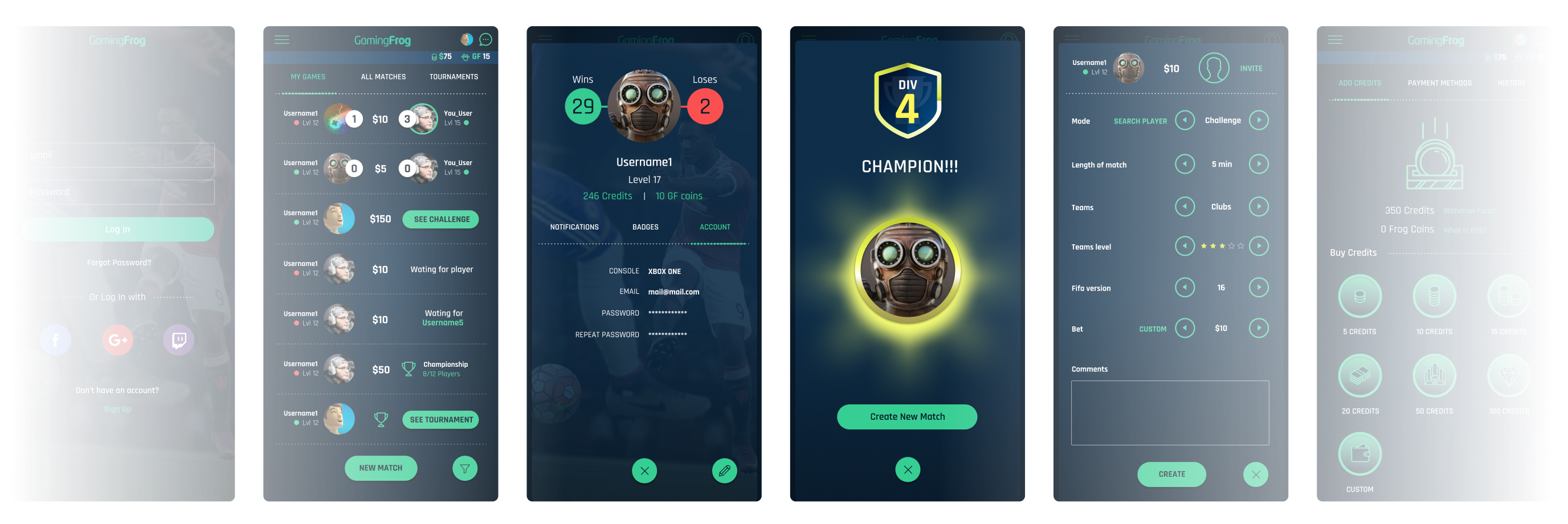
01 - Discovery and Research
Creating a competitive environment for FIFA players required more than matchmaking and challenges. During early interviews with both casual gamers and professional eSports players, one theme appeared consistently: trust.
Players loved the idea of challenging others for real money, but they also expressed strong concerns about fairness, cheating, and unclear results after a match was played. In Gaming Frog, once a challenge was accepted, the actual FIFA match occurred outside the app on PlayStation or Xbox. This meant the platform temporarily lost visibility of what was happening, and players had to manually report their scores.

This produced three main behavioral risks:
- Players could enter incorrect scores, intentionally or by mistake.
- Matches could remain open indefinitely if nobody reported results.
- There was no built-in mechanism to prevent abandoned or unplayed matches.
A strong reputation of “fair play” was a core expectation from competitive gamers, especially those used to platforms like Players Lounge and GamerSaloon.
Additionally, the market research revealed that competitor platforms had spent years building community trust through dispute resolution, event hosting, and consistent rule enforcement. This reinforced the importance of addressing fairness as a primary UX challenge.
02 — Ideation & Strategy
With user concerns clearly identified, we focused on building a structured, predictable, and enforceable match flow. The goal was simple: Ensure every match ends with a verified result, no ambiguity, no endless open challenges, and no room for cheating.
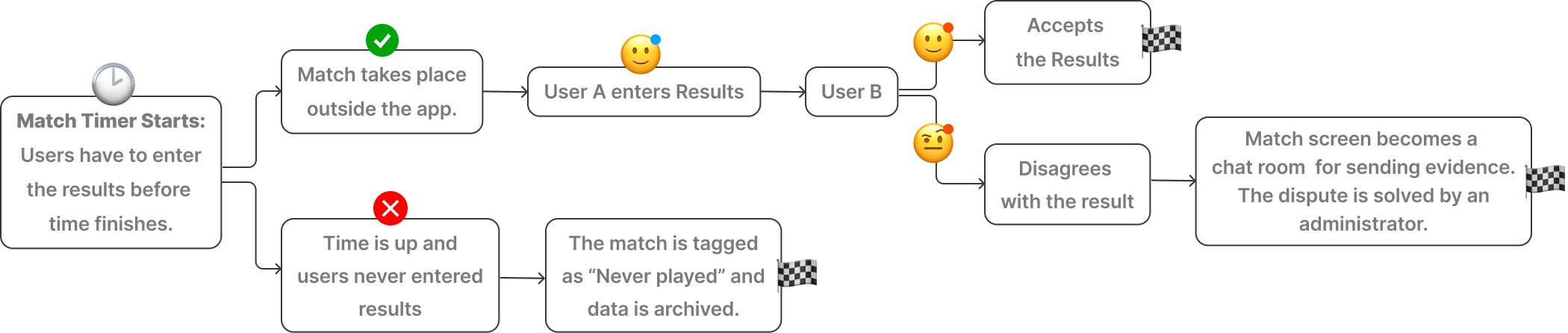
We mapped the entire experience from the moment a user sent a challenge until both parties confirmed the final score. Several strategies emerged:
Design a system where every challenge progress step was visible, time-bound, and trackable.
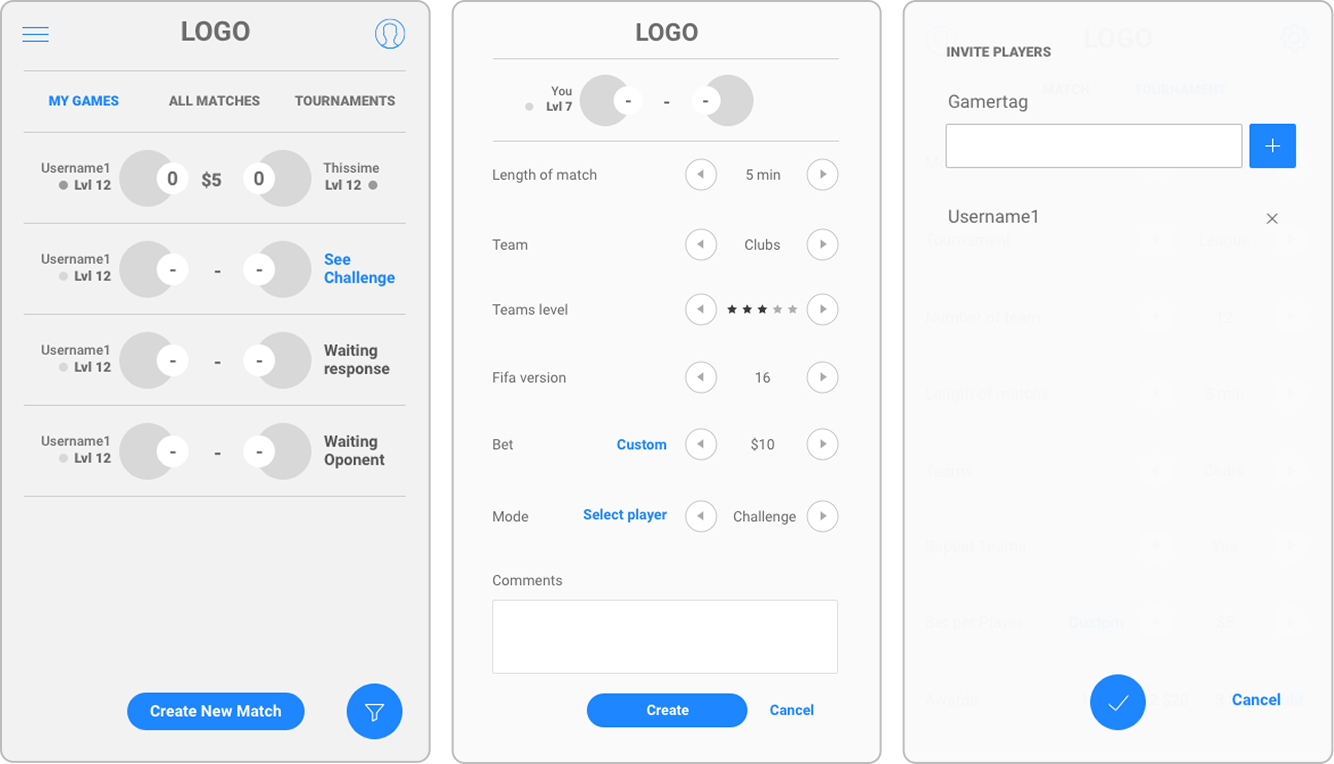
Require both players to enter — or accept — the final score for the match to be completed.
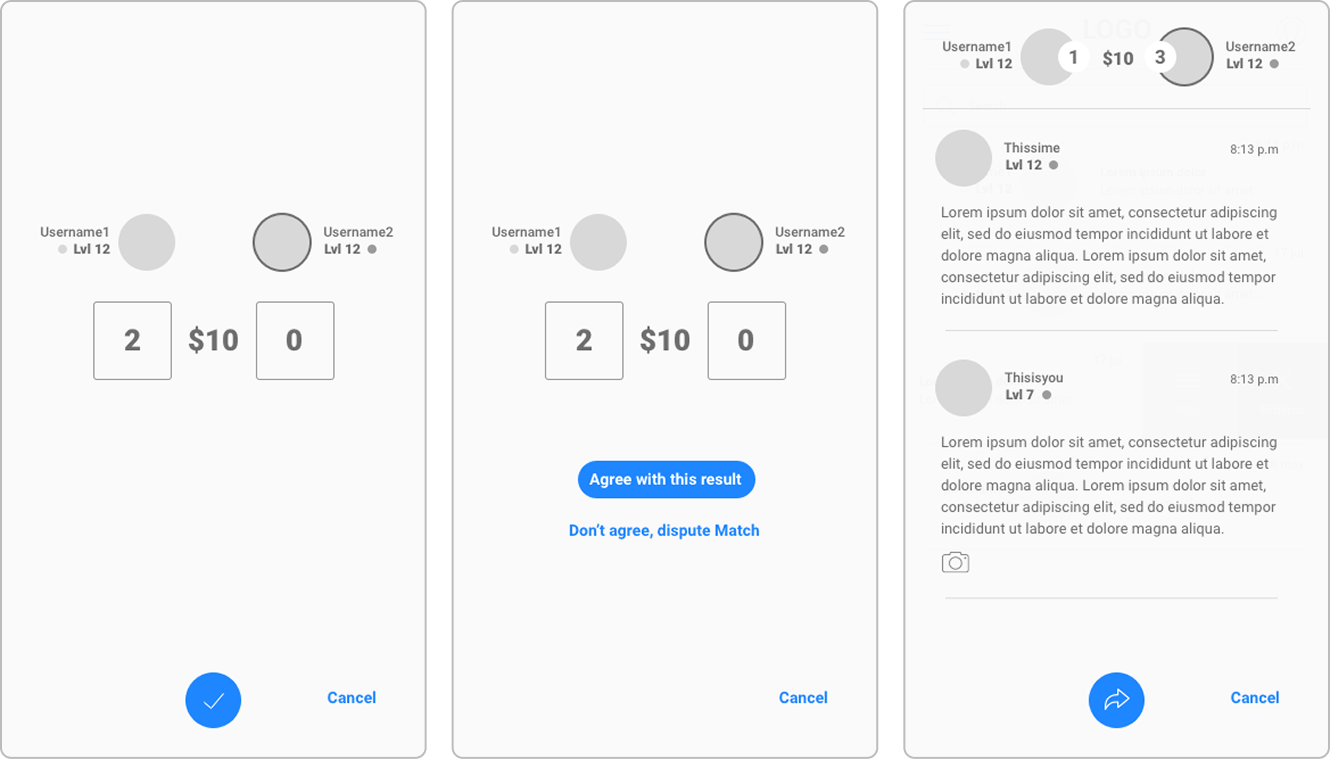
Introduce a countdown window for playing the match and reporting results. This prevented the system from accumulating “dead” or abandoned matches.
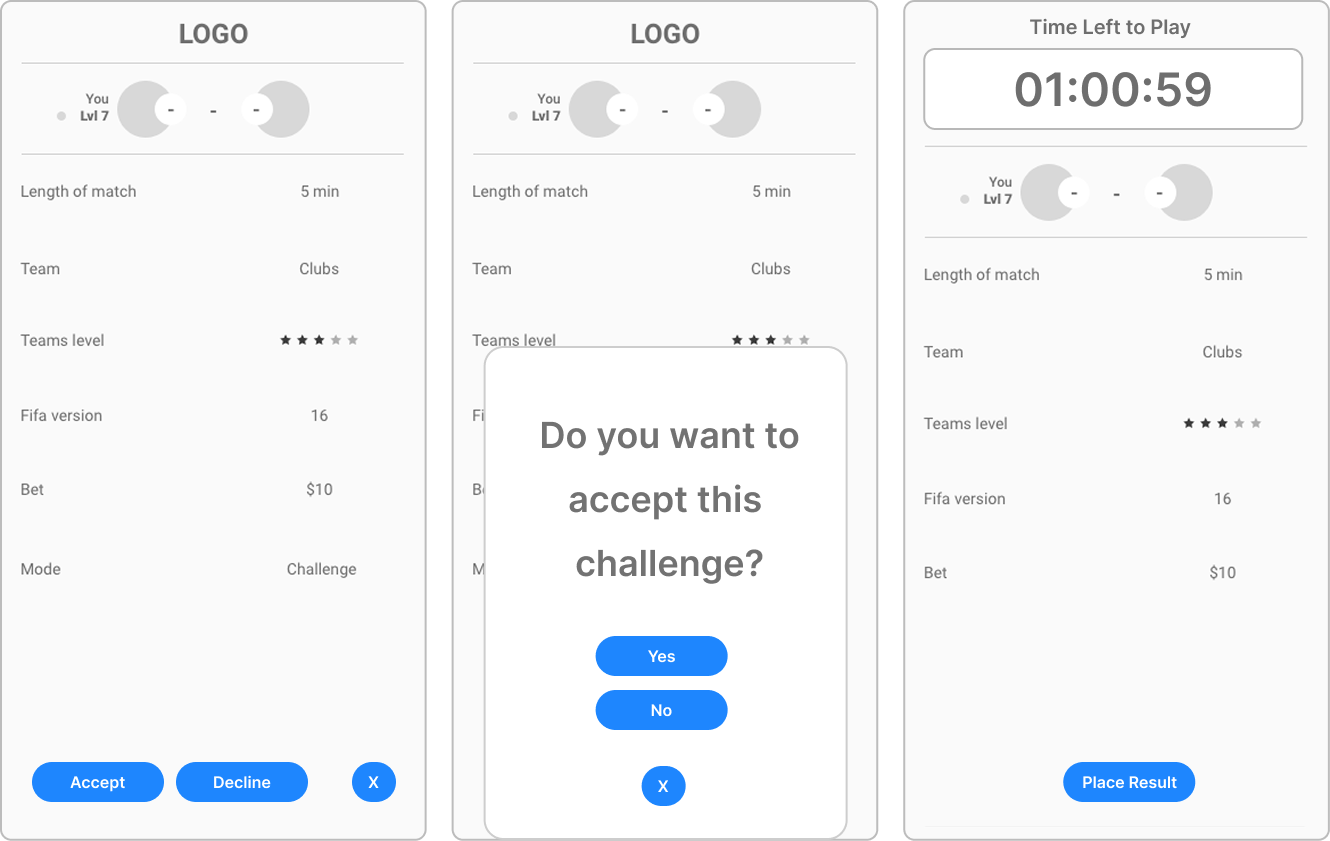
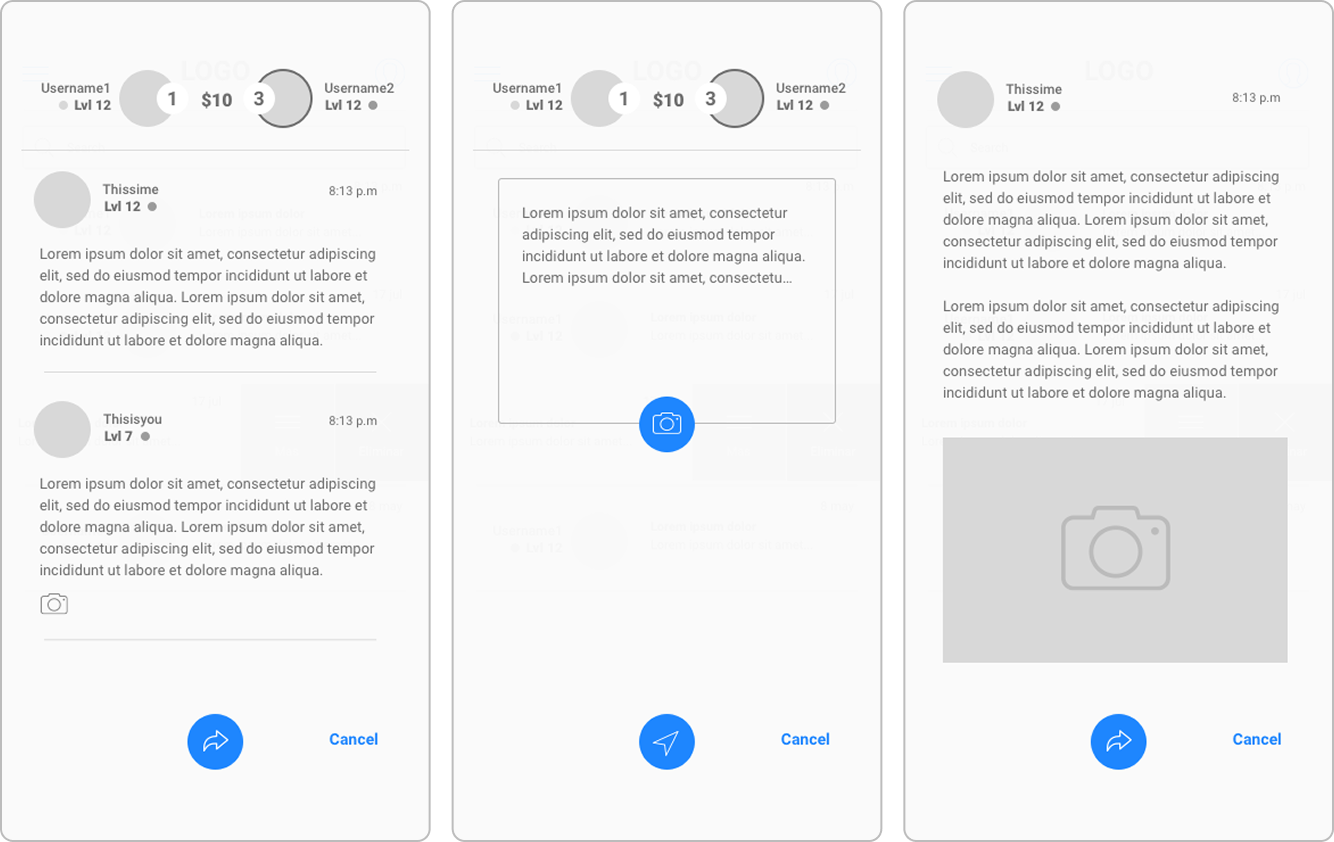
If users didn't agree on the match result, they could open a dispute flow where evidence (screenshots, video clips, comments) could be submitted.
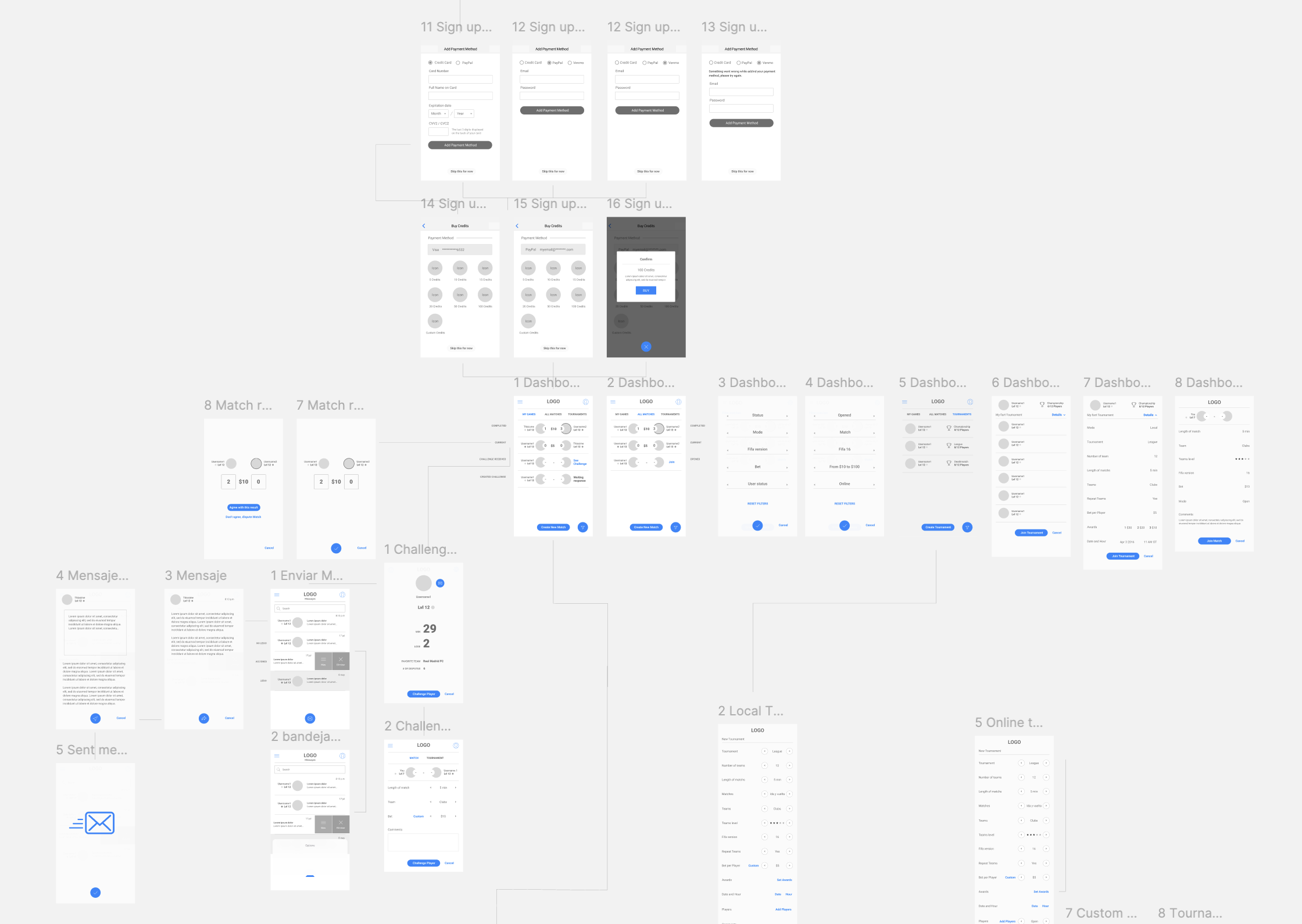
We explored multiple flows using low-fidelity wireframes to test different sequences with gamers and internal stakeholders. Users responded well to a structured, time-bound system that made responsibilities explicit. This research informed the core principle of the feature: Fair play must be designed, not assumed.
03 — Design & Development
Design Desicions
I led the end-to-end UX for the Fair Play flow, working closely with developers to ensure the sequence logic matched the technical constraints of real-time match reporting.
Three UX pillars guided the final design:
- Clarity — players must always know what to do next.
- Accountability — each player is responsible for confirming results.
- Traceability — every action leaves a visible record to prevent misunderstandings.
This interactive walkthrough highlights the full match lifecycle — from accepting a challenge to reporting final scores, handling disputes, and closing the match in a fair and transparent way.
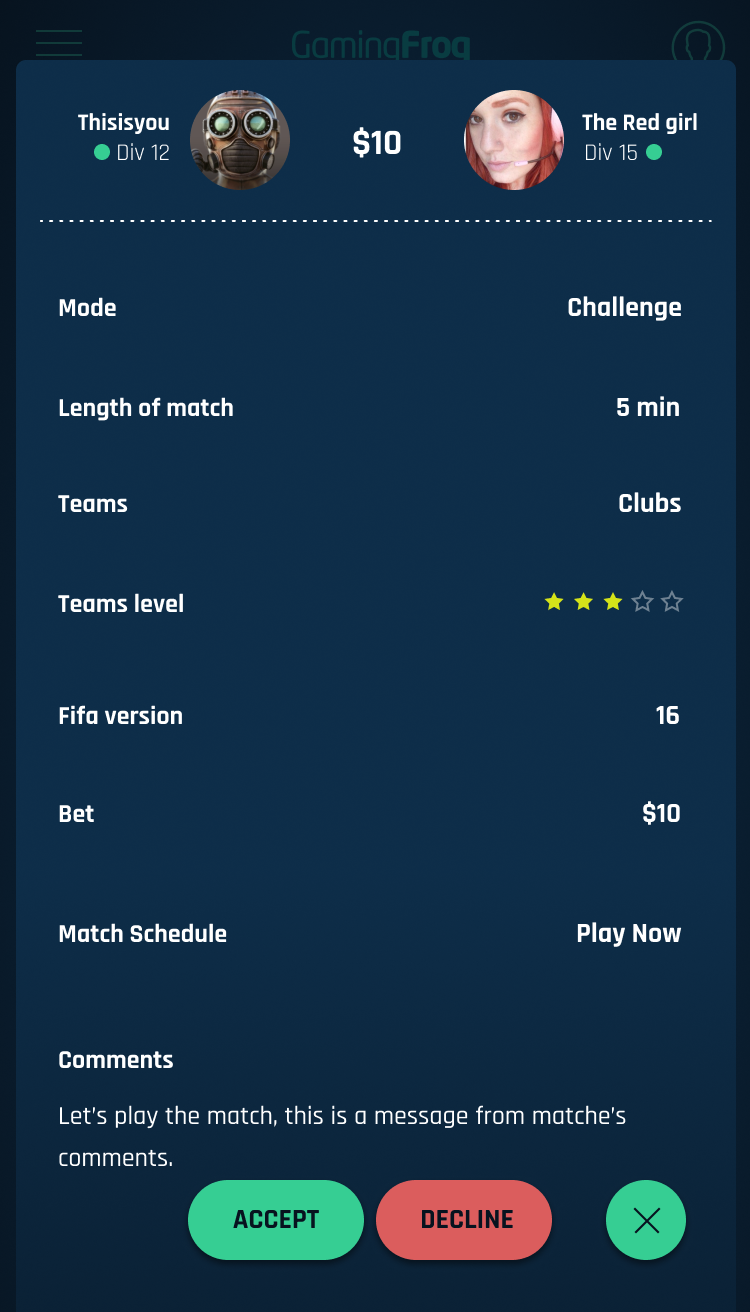
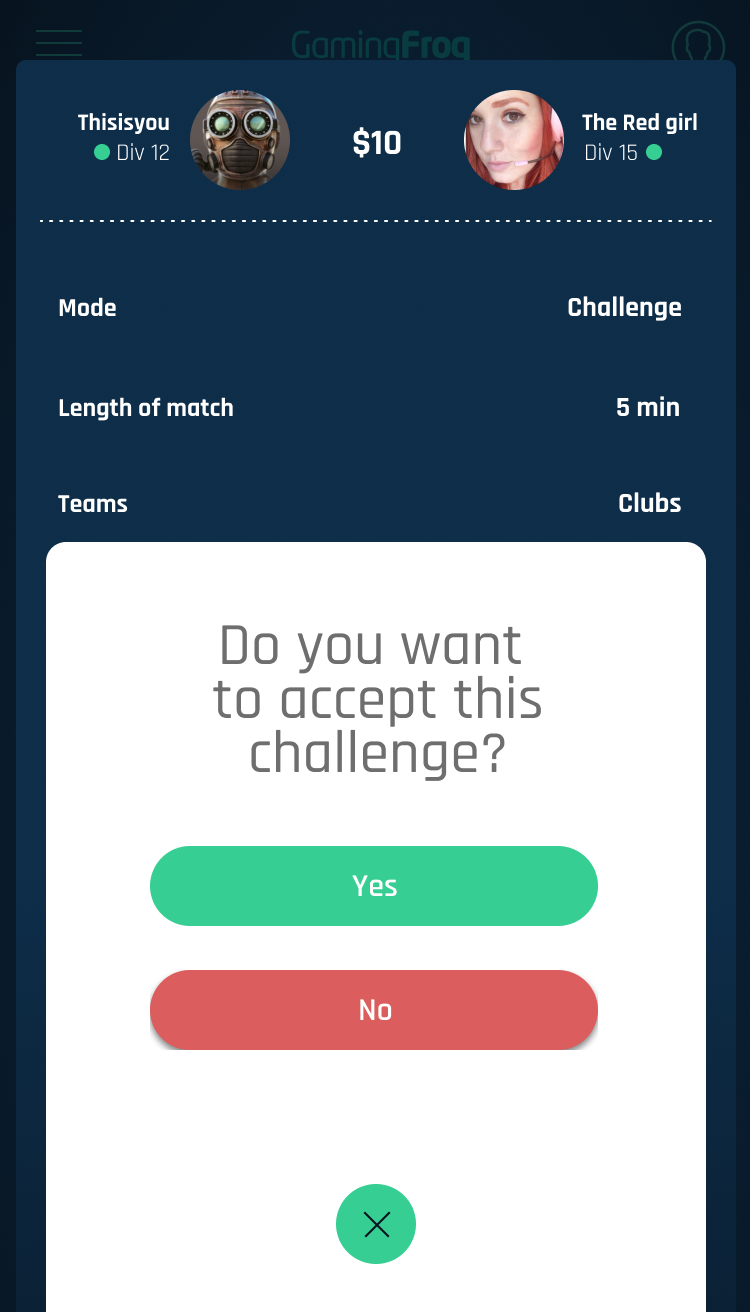
1 — Challenge Received
The user reviews match details and decides whether to accept the incoming challenge.
2 — Accepting the Match
A clear confirmation step reduces mis-clicks and ensures intentional participation.
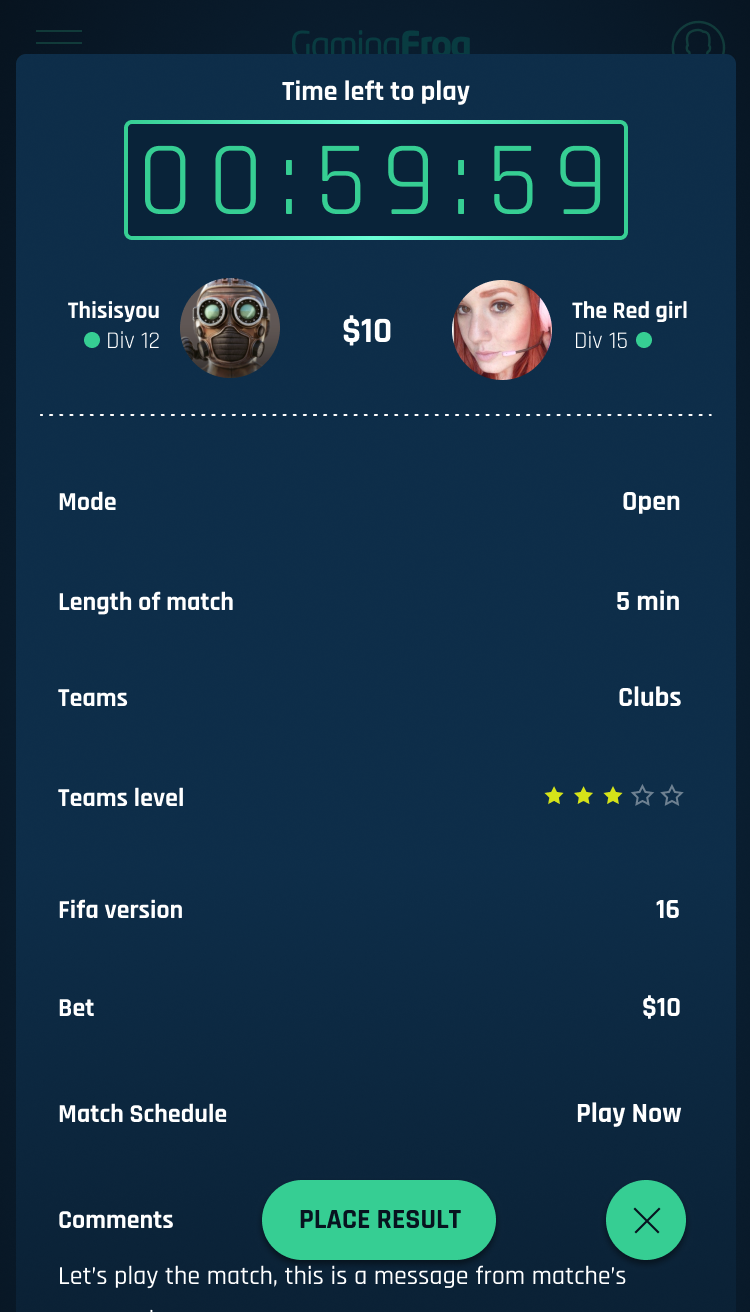
3 — Match Timer Begins
A countdown timer prevents abandoned matches and keeps the system clean.
4 — Score Confirmation
Any player can submit the final score, the other player has to agree to ensure fairness.
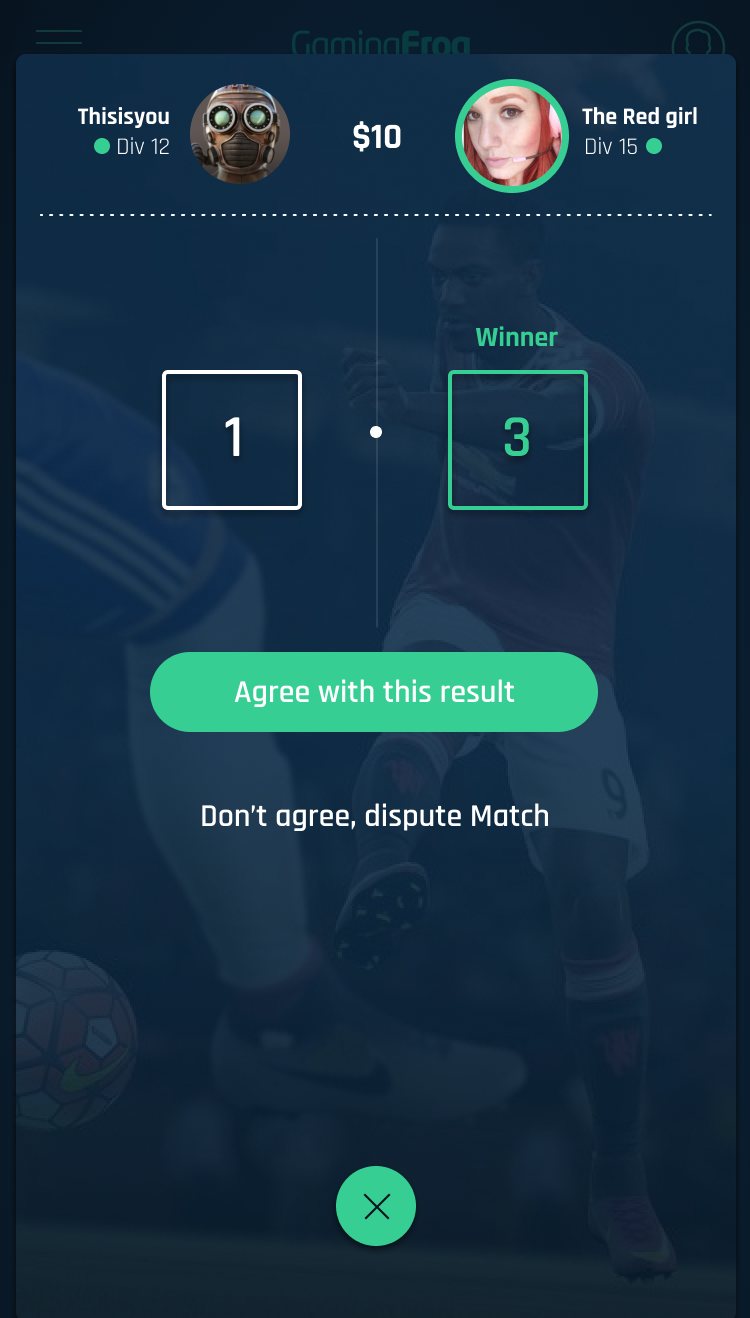
5 — Dispute Raised
If users disagree, a dispute flow is triggered to maintain fair play
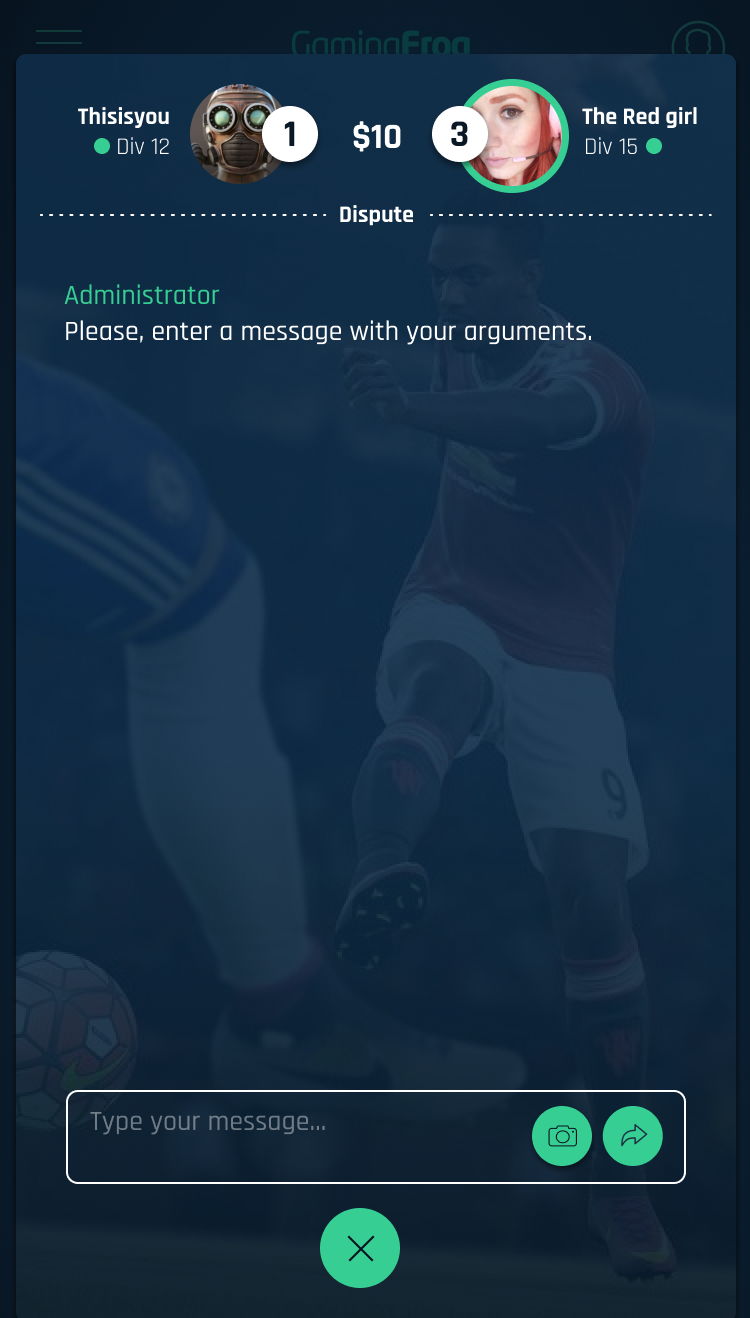
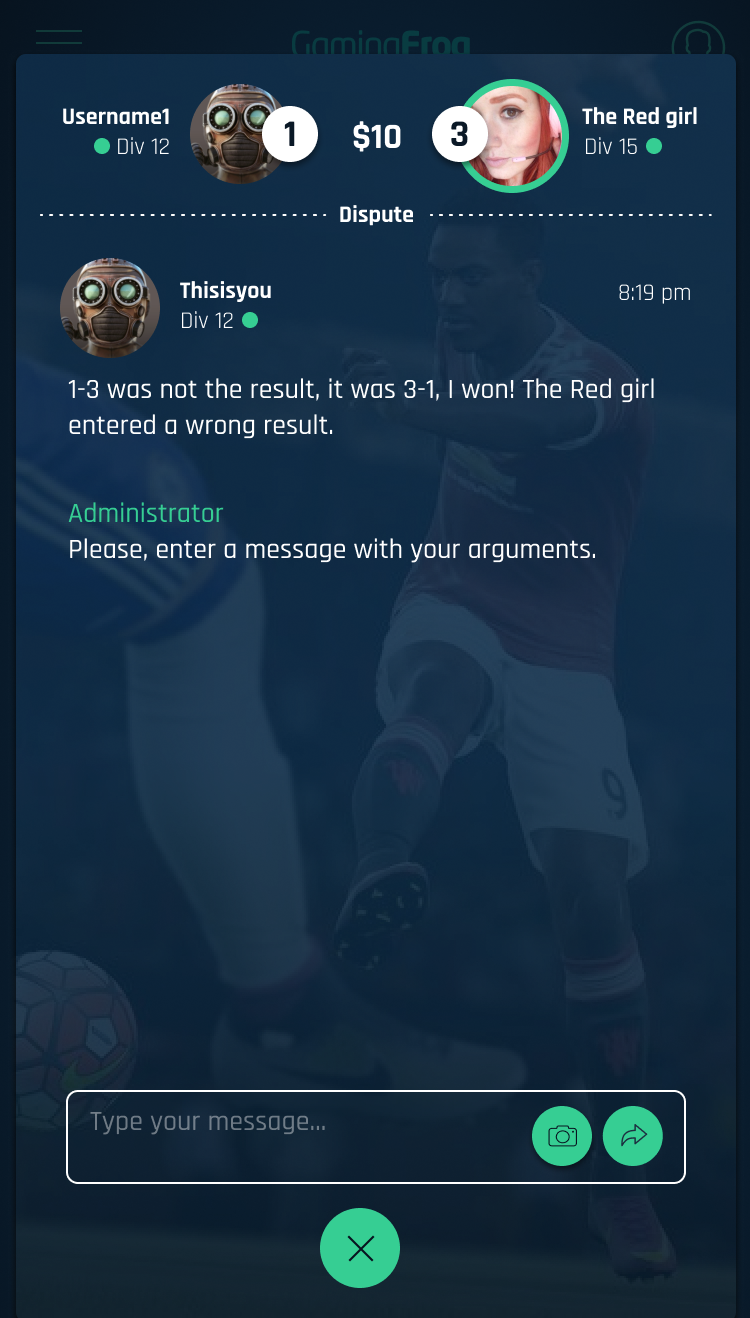
6 — Chat for Dispute
A chat is created between both players to establish a safe and transparent environment of understanding where both can express opinions.
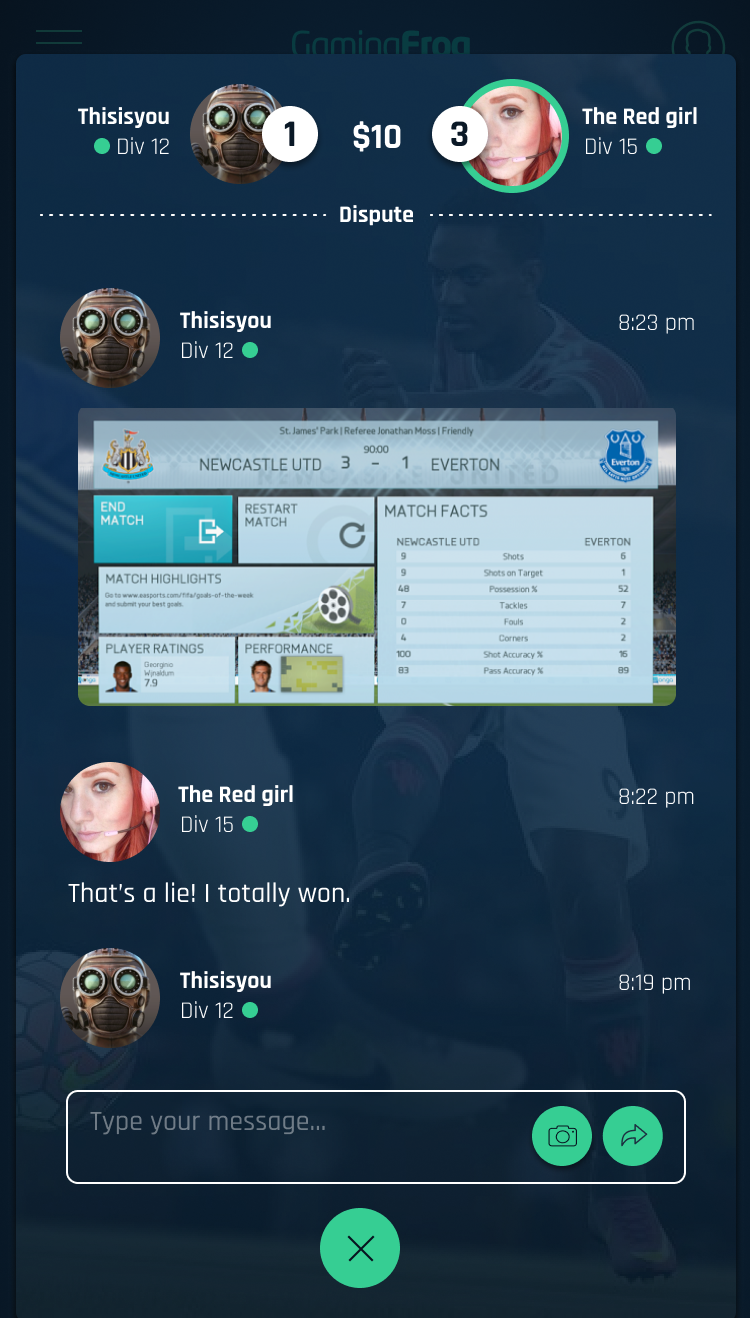
7 — Evidence Uploaded
Players provide explanations, evidence, or screenshots supporting their case.
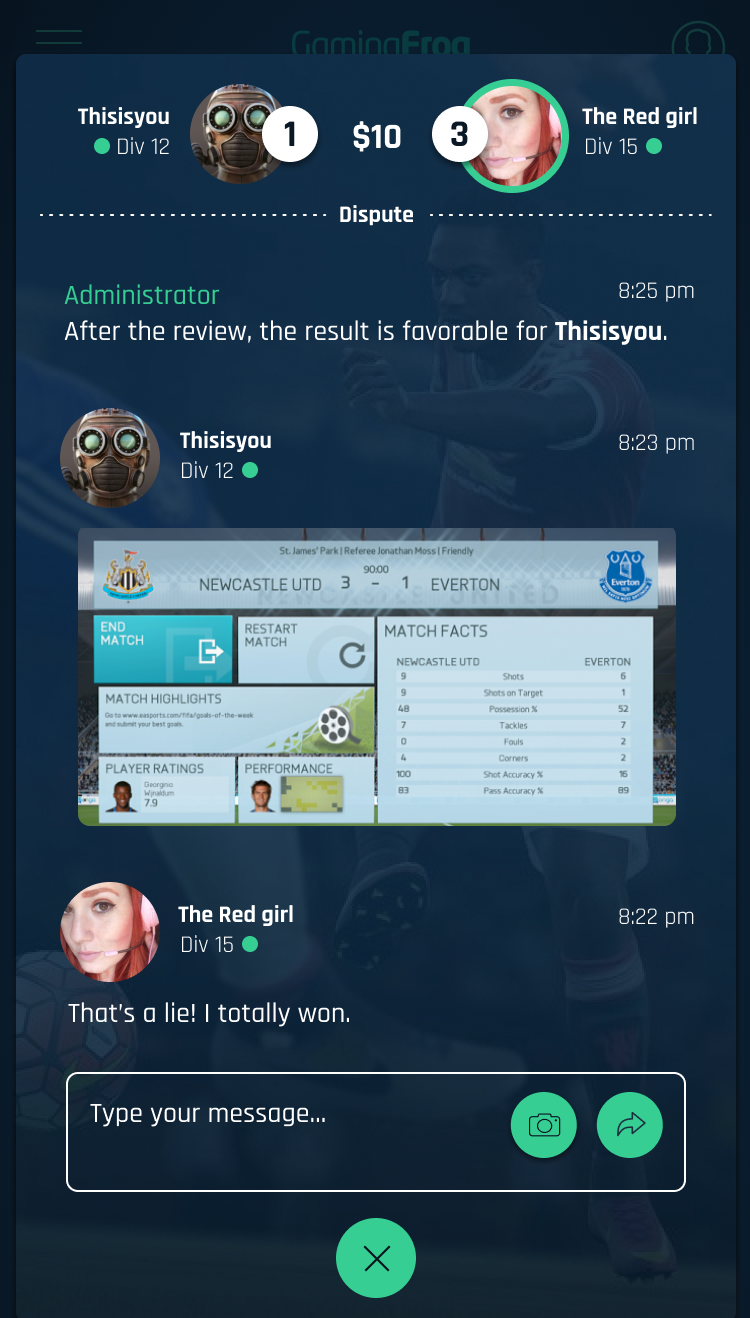
8 — Admin Review
A moderator reviews both perspectives and validates the correct result.
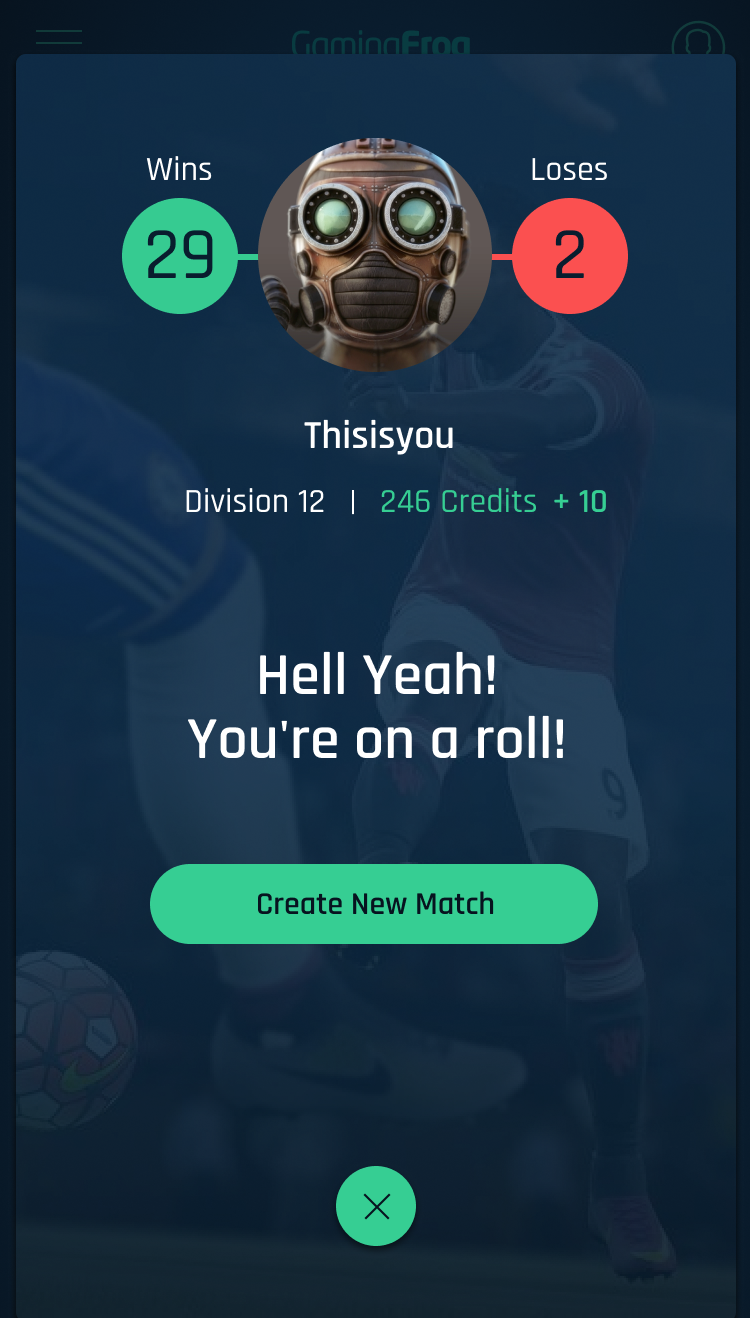
9 — Match Completed
Winning rewards the user and prompts a new match right away, sustaining momentum and engagement.
Layered Interaction Model: A Game-Driven Navigation Approach
To align the app with the playful feel the founders wanted, Gaming Frog was designed around a layered navigation system inspired by Pokémon GO. Instead of moving forward and backward through screens, interactions unfolded vertically, one layer at a time.
This approach delivered three UX benefits:
- Clarity & momentum: Each action opened a new layer, creating a simple, predictable progression without overwhelming the user.
- Thumb-friendly actions: All primary actions, accept, decline and confirm, remained close within the natural thumb zone, improving one-hand usability.
- Game-like immersion: Stacked layers and smooth transitions made the experience feel closer to a game than a traditional app, reinforcing engagement.
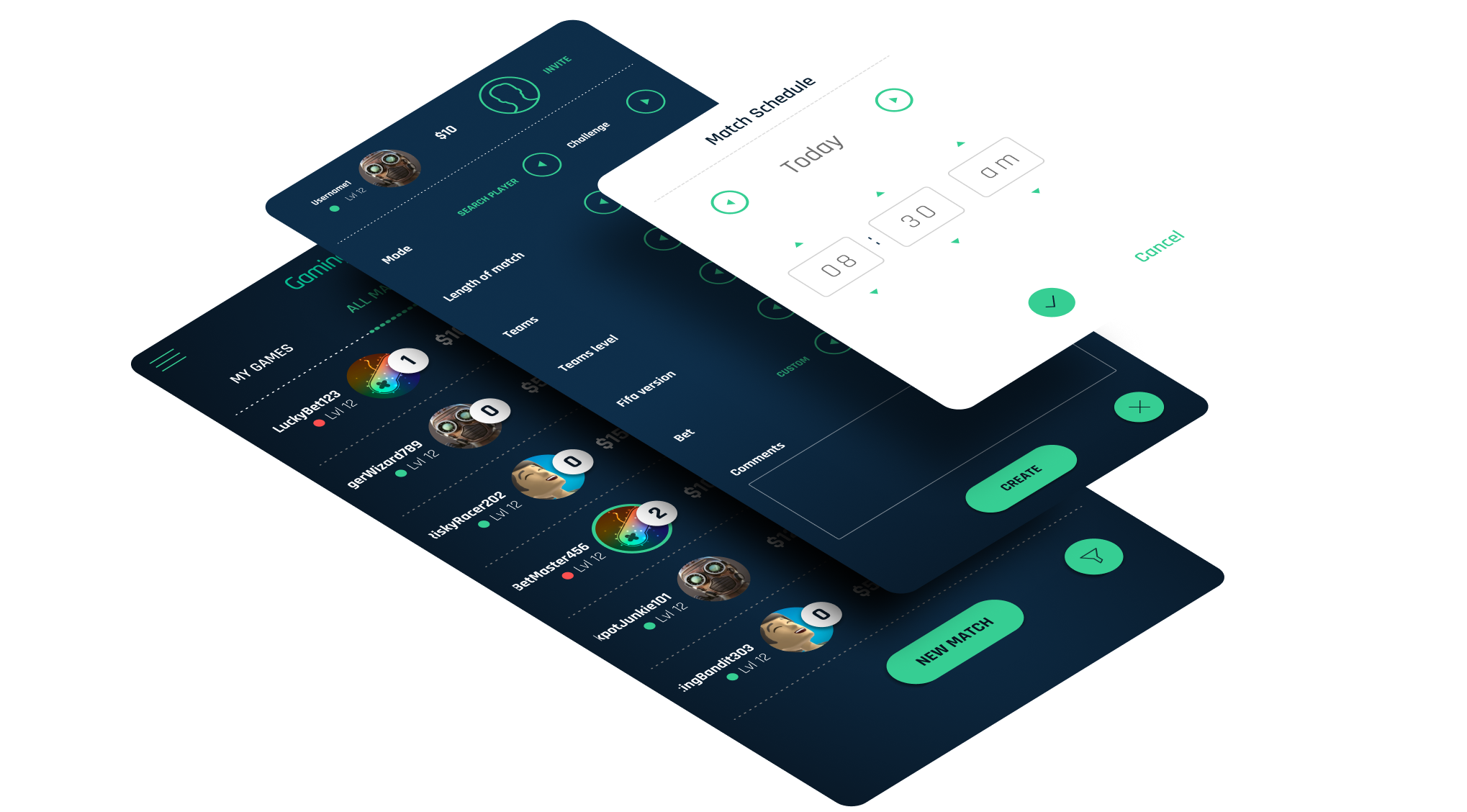
This model became a core structural pillar, keeping complex competitive flows intuitive, fluid, and aligned with the product’s gaming DNA.
04 - Testing and Launch
We tested the first version with competitive gamers, casual players, and several eSports influencers. Here’s what we discovered:
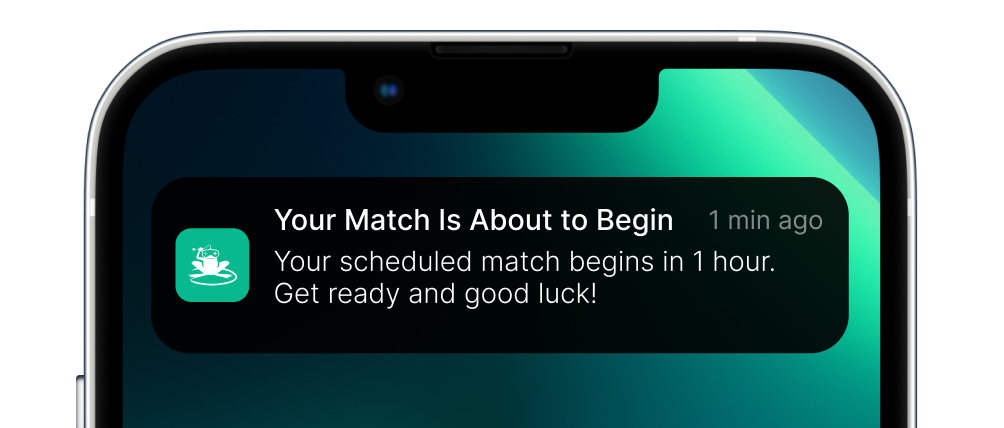
❌ Issue: Players often missed the match start time because they lacked clear reminders, leading to unnecessary expirations and abandoned matches.
✅ Solution: We added two timed notifications, one 1 hour before and one 10 minutes before kickoff to keep players aligned and prevent accidental match expiration.
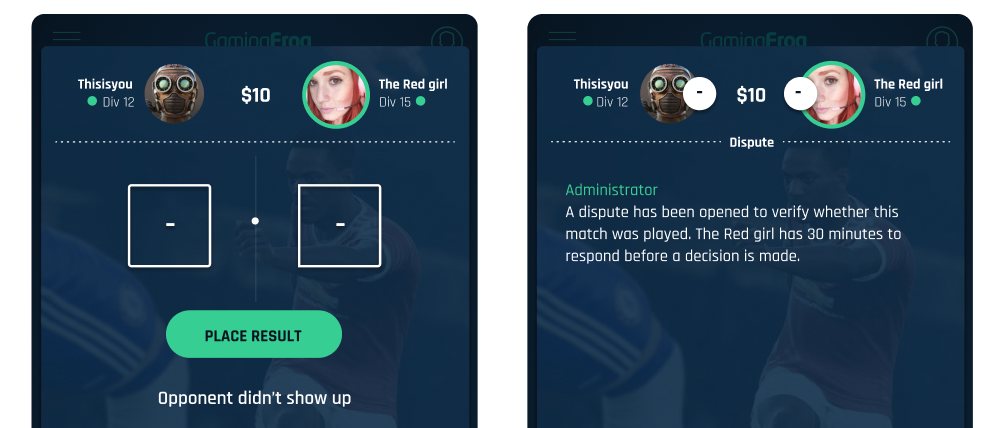
❌ Issue: Some players joined the match, but their opponent never showed up and the app didn’t offer any way to report a no-show. This created stuck games and unfair outcomes.
✅ Solution: We added a “Opponent didn’t show up” action that triggered a dispute with a 24 hours waiting window. If the opponent fails to appear, the attending player automatically wins 3–0, ensuring fair and trackable resolutions.
After several rounds of iteration, the system was launched and became a central pillar of Gaming Frog’s reliability and reputation.
05 - Results and Impact
The Fair Play system dramatically improved trust and reduced user confusion during competitive challenges.
80%
80% of matches reached proper completion after the introduction of the timer and dual confirmation model.
-50%
Dispute rates dropped once users received clearer guidance on documenting results.
→ Abandoned matches decreased significantly, improving overall platform health and reducing backend cleanup operations.
→ Players expressed higher confidence in the platform’s fairness compared with alternatives in the market.
06 - Key Takeaways
→ Fair play is a UX challenge. Structuring rules, states, and responsibilities is essential to avoid ambiguity in competitive environments.
→ Timers and confirmations create accountability and reduce abuse without adding friction for honest users.
→ Community products rely on fairness. Without transparent resolution flows, no reward system or gamification can succeed.